
In This Article

New student pilots often judge an entire flight by the last few seconds: the flare, the touchdown, and whether the airplane rolled smoothly onto the runway.
That is understandable. The flare is visible, dramatic, and easy to label as “the landing.” But many landing problems begin much earlier. On downwind, during the power reduction, or when the pilot turns base.
A landing is usually the result of everything that happened before final approach. If the traffic pattern is consistent, properly spaced, and well-managed, the landing becomes much easier to execute. If the pattern is rushed, wide, tight, high, low, or unstable, even a skilled flare may not save the approach.
For students working toward a private pilot certificate, the priority should not be chasing a perfect touchdown. It should be building a repeatable traffic pattern that consistently produces a stabilized final approach.
The flare is often a symptom, not the cause
The flare is where an approach becomes most visible. The airplane is close to the runway, the ground is moving quickly, and the pilot has very little time to correct mistakes. That makes the flare feel like the moment when everything succeeds or fails.
But a poor flare may be caused by:
- Excessive airspeed on final
- An approach that was too high or too low
- A late power reduction
- An unstable base-to-final turn
- Poor runway alignment
- Inconsistent pattern spacing
- Fixating on the runway instead of managing the aircraft's energy
For example, carrying extra airspeed can make the flare feel too high because the airplane continues flying. A student may respond by pushing the nose down, pulling back abruptly, or trying to force the airplane onto the runway. The flare appears to be the problem, but the excess energy was created earlier on final.
The better question is not, “How do I flare better?”
It is, “What did I allow to develop before I reached the flare?”
The traffic pattern is a chain of cause and effect
A standard traffic pattern gives a pilot a sequence of positions and decisions. Each leg affects the next one.
Abeam the runway
On downwind, the airplane should be at the applicable pattern altitude and positioned with enough spacing to allow a normal descent and base leg. The exact spacing, power settings, flap schedule, and speeds depend on the aircraft's approved procedures, local airport practices, wind, traffic, and your CFI's instruction.
Abeam the approach end of the runway is commonly used as a key decision point. This is where the pilot may reduce power, begin the descent, configure the aircraft, and complete the before-landing checklist.
If power is reduced too late, the airplane may remain high and fast. If it is reduced too early, or if the airplane is already too close to the runway, the aircraft may become low before reaching base or final.
Downwind spacing
Spacing matters because it controls how much room the airplane has to descend and align with the runway.
A downwind that is too wide can create a long base leg. The pilot may then arrive on final high, fast, or both. Trying to correct late can produce steep banks, large power changes, or an approach that is rushed from one correction to the next.
A downwind that is too close can create the opposite problem. The base leg becomes tight, the turn to final may happen quickly, and the pilot may need to use a steeper bank or accept an unstable approach. A tight pattern is not automatically a better pattern.
The goal is not to fly the runway at one exact lateral distance in every condition. The goal is to create enough room for a controlled, predictable descent while maintaining traffic awareness and complying with local procedures.

Turning base
The base turn should be based on position, altitude, wind, traffic, and the desired final approach, not simply on a memorized number of seconds.
A strong tailwind on base can move the airplane toward the runway faster than expected and increase the risk of overshooting final. A headwind may require different timing. Turning base too early can create a steep, tight approach. Turning too late can produce a long base and a high final.
Students should learn to ask:
- Where is the runway relative to the airplane?
- What is the wind doing to the ground track?
- Am I descending at a controlled rate?
- Will this turn place me on a normal final approach?
- Is there traffic that changes the plan?
The traffic pattern is a planning exercise, not a set of disconnected turns.
Final approach
By final, the aircraft should be configured according to the aircraft's procedures, aligned with the runway, at the target approach speed, and descending toward a suitable aiming point.
Airspeed is especially important. Excess airspeed creates excess energy. That energy may show up as a long float, balloon, bounced landing, or porpoise. Reducing power at the last moment does not immediately erase the energy already present in the airplane.
Pitch, power, trim, and configuration should be managed early enough that the airplane is not still undergoing major changes close to the runway.
What a stabilized approach looks like in a light trainer
A stabilized approach is not a guarantee of a perfect landing. It is a controlled setup that gives the pilot a reasonable opportunity to complete the landing safely.
In a typical light trainer, a stabilized final approach generally means:
- The airplane is aligned with or correcting appropriately toward the runway centerline.
- The aircraft is on the intended glidepath.
- Airspeed is at or near the aircraft's recommended approach speed.
- The landing configuration is complete.
- The descent rate is controlled.
- The pilot is using a manageable pitch-and-power combination.
- Only small corrections are needed.
Many training programs use a defined stabilized-approach gate, commonly by approximately 500 feet above ground level in visual conditions. The specific criteria should be established with your CFI and adapted to the aircraft, airport, weather, and operation.
If the airplane is not stabilized by the agreed point, the correct answer is usually a go-around, not an attempt to salvage the approach.
The FAA's Airplane Flying Handbook, Chapter 8 explains the purpose and structure of airport traffic patterns, including downwind, base, final, pattern altitude, and go-around considerations.
Common pattern mistakes and practical fixes
“I'm always high on final.”
Possible causes: Downwind too wide, power reduction too late, delayed configuration, or an overly long base.
Try this: Review the entire pattern rather than pulling power earlier at random. Work with your CFI on a consistent downwind reference, abeam-the-runway check, and base turn point. Use pitch and power deliberately instead of making large corrections late.
“I'm always low on final.”
Possible causes: Downwind too close, power reduced too early, descent started too soon, or an early base turn.
Try this: Maintain the appropriate pattern altitude until the planned point, then use a controlled descent. Avoid adding power late without understanding why the airplane became low.
“I keep overshooting final.”
Possible causes: Tailwind on base, excessive speed, late turn timing, or failure to account for ground track.
Try this: Look outside, evaluate the wind, and plan the turn based on where the airplane will be, not only where the nose is pointed. If the turn becomes unsafe or the runway alignment is not developing normally, go around.
“I float every landing.”
Possible causes: Excess airspeed, a high final, or an attempt to hold the airplane off the runway too aggressively.
Try this: Stabilize final at the correct speed for the aircraft and conditions. Do not use the flare to correct an approach that was already too fast.
“I balloon or porpoise.”
Possible causes: Abrupt pitch inputs, excess speed, or trying to force the airplane back onto the runway after a bounce.
Try this: Follow your CFI's aircraft-specific procedure. A bounce or porpoise that cannot be immediately and safely corrected should lead to a go-around. Do not continue an unstable sequence just because the runway is below you.
Consistency matters more than perfection
The traffic pattern is valuable because it creates repeatability. Students improve when they begin to recognize the same sequence:
- The same pattern altitude
- A consistent downwind track
- A planned abeam check
- A predictable power reduction
- A deliberate configuration sequence
- A planned base turn
- A stabilized final approach
- A normal flare and touchdown
This does not mean every pattern should look identical. Wind, traffic, runway conditions, aircraft weight, and airport layout require judgment. But a consistent process gives the pilot a reliable starting point for making those adjustments.
The goal is not to memorize one rigid pattern. The goal is to understand how each decision affects altitude, airspeed, glidepath, and runway alignment.

Drills that help students improve the pattern
Landing practice should include more than repeated attempts to improve the flare.
Fly the pattern at altitude
With your CFI, practice ground-reference work and visualize the rectangular pattern from a safe altitude. Discuss wind correction, spacing, turns, and ground track before applying the exercise at the airport.
Verbalize the sequence
Talk through the pattern: altitude, runway position, power, configuration, airspeed, descent, base timing, final alignment, and stabilized-approach criteria. Verbalizing the plan can help prevent task saturation.
Chair-fly the pattern
From a quiet location, mentally rehearse the radio calls, visual references, checklist items, configuration changes, and go-around decision points. Chair flying is especially useful between lessons.
Use a written feedback loop
After each lesson, write down:
- What happened on downwind?
- Was the abeam point consistent?
- How did the base turn develop?
- Was final stabilized?
- What caused the landing result?
- What is the one pattern habit to focus on next time?
A video or cockpit recording may help during debriefing when permitted and used appropriately. Flight-tracking tools can also support review, but they should supplement, not replace, outside scanning, aircraft control, and CFI instruction.
Practice go-arounds
A go-around is not a punishment for making a mistake. It is a normal, professional decision when the approach no longer meets the safety plan.
Practice the procedure with your CFI so that adding power, establishing the appropriate attitude, managing configuration, communicating, and rejoining or departing the pattern become familiar actions.
Build your landing from the pattern up
A good landing is not created only during the flare. It is built through the decisions made on downwind, base, and final.
Before focusing on perfect touchdowns, focus on entering the pattern correctly, maintaining appropriate spacing, managing energy, turning base with purpose, and becoming stabilized early. When those habits become repeatable, the flare becomes less mysterious and the landing becomes more predictable.
At Matta Aviation Services, flight training at Freeman Field Airport in Junction City, Kansas, is built around practical instruction and repeatable habits. MAS provides personalized training for students pursuing private pilot lessons, instrument, commercial pilot training, multi-engine, CFI, CFII, and MEI certificates and ratings. The school also supports flight reviews, instrument proficiency checks, aircraft checkouts, and aircraft rental.
Students from Junction City, Manhattan, Fort Riley, and the surrounding Kansas region (including soldiers, veterans, and military families) can work with instructors who understand that learning to fly is a step-by-step process. The instructor provides coaching, structure, and honest feedback. The student builds the habits.
Ready to work on your traffic pattern? Learn more about flight training in Kansas, or book a discovery flight to experience the cockpit with a certified flight instructor.
Call 785-208-4610 or email info@mattaaviationservices.com to speak with Matta Aviation Services.
Frequently asked questions
Why is my landing bad if my flare feels correct?
The flare may be exposing an earlier problem, such as excess airspeed, poor alignment, an unstable glidepath, or an inconsistent pattern. Review the approach from downwind forward.
What altitude should I use in the traffic pattern?
A standard pattern is commonly flown around 1,000 feet above airport elevation, but pilots must follow applicable airport information, aircraft procedures, local practices, and CFI instruction.
When should I go around?
Go around whenever the approach is unstable, the runway is unavailable, traffic creates a conflict, the airplane is not aligned or configured properly, or continuing would require large or rushed corrections.
Are go-arounds normal during flight training?
Yes. Go-arounds are an important aircraft-control and decision-making skill. Practicing them helps pilots recognize when an approach should be discontinued before the situation becomes more difficult.
Can better landings be learned through ground school?
Ground instruction helps students understand traffic-pattern geometry, aircraft performance, wind, stabilized approaches, and decision-making. That knowledge must then be developed through supervised flight practice with a CFI.
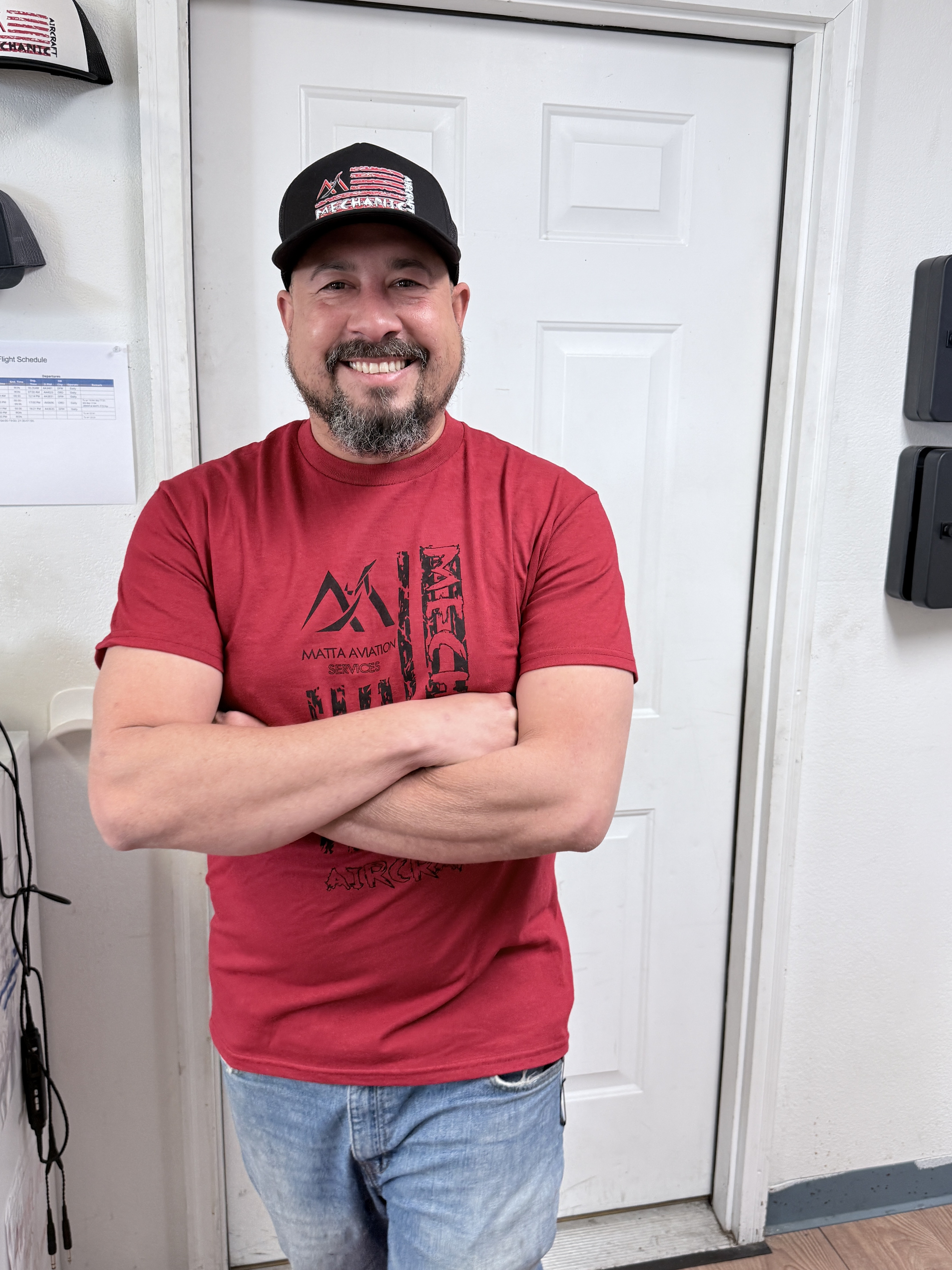
About the Author
Eddie Matta
FAA A&P IA · CFI · CFII · MEI
Eddie Matta is the owner of Matta Aviation Services at Freeman Field Airport (3JC) in Junction City, Kansas. He holds FAA Airframe and Powerplant (A&P) and Inspection Authorization (IA) certificates and is a CFI, CFII, MEI, AGI, and IGI. He served in the U.S. Army and brings both military and civilian aviation experience to every lesson and inspection.
Ready to Fly?
Book a Discovery Flight
Experience the cockpit at Freeman Field Airport in Junction City, KS. Hands-on flying with a CFI. No experience required.
Start Training
Flight Training Programs
Private Pilot through CFI. Structured training with an experienced instructor serving Junction City, Fort Riley, and Manhattan, KS.